A guided trip can spoil an angler. Someone else rigs the rod, ties on the bait, and points at the water when the boat reaches a good spot. The moment you decide to fish on your own, every one of those decisions becomes yours, starting with the gear you have to buy before the first cast.
That transition is common. On r/FishingForBeginners, one reader explained they had only ever fished on guided tours where everything was provided, and now wanted to get into lakes, creeks, and small rivers alone. The gear question that follows is not really about brands. It is about matching equipment to the water and the way you plan to fish.
This guide covers the pieces of a first setup, how the main options differ, and how to read listings so you do not buy gear you will never use.
Match Your Gear to the Water You Fish Most
The most useful thing you can do before buying anything is to pick the water you will actually fish. “Lakes, creeks, small river” describes three different situations, not one. A creek handles differently than an open lake, and a small river that runs fast after rain is different again. Freshwater and saltwater add another split, and Fish Lizard’s blog coverage leans into both, which tells you the categories are not interchangeable.
Answer three questions before you shop:
- Where will you fish most often, and is that water fresh or salt?
- Will you fish from shore, wade, or fish from a boat?
- What do you expect to catch, in broad terms?
Those answers narrow the rod and reel choice faster than any brand list. If you genuinely do not know yet, buy for the water closest to home, since that is where most early trips will happen.
Rod and Reel: The Two Decisions That Matter Most
Every part of a fishing setup serves a specific role, and the rod and reel serve the most visible ones. Rod material and reel style are the two things a new angler can evaluate without years of experience.
Rod materials: fiberglass, graphite, and carbon fiber
Most beginners start with fiberglass fishing gear. Fiberglass is the traditional entry point and remains the common material in starter setups. Some rods are built from carbon fiber or graphite instead, which makes them lighter. That weight difference is the advantage those materials are chosen for, and it matters more the longer you hold the rod.
| Rod material | What it means for a new angler |
|---|---|
| Fiberglass | The material most beginners start with, and the one that shows up most often in starter setups. |
| Graphite or carbon fiber | Lighter rods, which is the reason these materials are picked over fiberglass. |
Neither material is wrong. If you are unsure, fiberglass matches how most new anglers begin, and a lighter graphite rod makes a reasonable upgrade once you know you will keep fishing. What matters more is that the rod and reel work together, which is the next decision.
Reel types: closed spin-casting and open-bail spinning
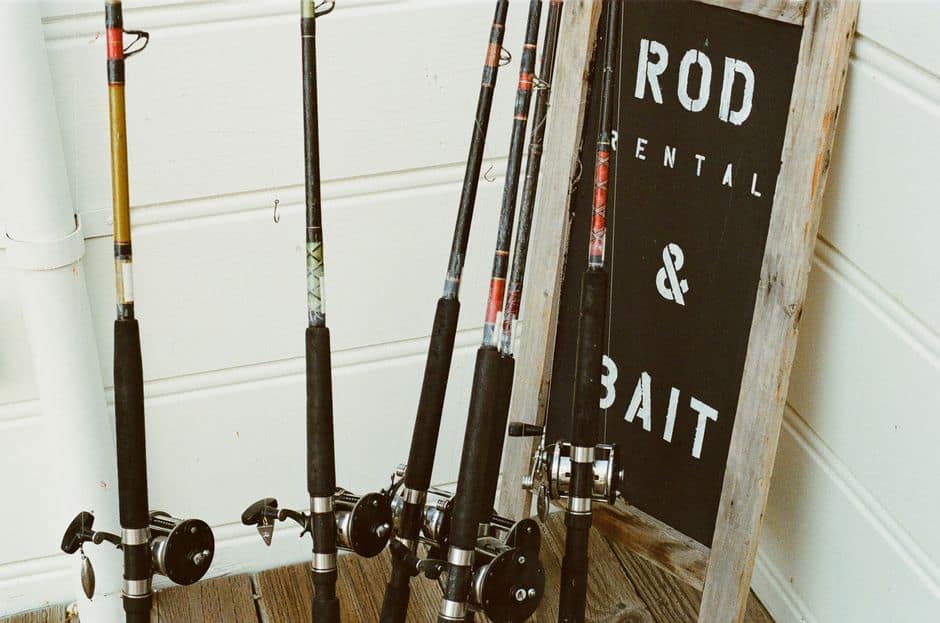
Two reel styles come up most often for beginners: the closed spin-casting reel and the open-bail spinning reel. A closed spin-casting reel is typically paired with a rod that has a pistol-style grip. Open-bail spinning reels are the other common starting point.
Choosing between them is often less work than it sounds, because combo sets and kits pair a rod with a reel already. Buy a matched pair and the decision is made for you. Buy separately and you need to check that the reel type and the rod’s grip style agree.
Line: Monofilament, Braided, and Fluorocarbon
Fishing line comes in three main types: monofilament, braided, and fluorocarbon. They behave differently, and a rod and reel combo usually arrives spooled with one of them. Many new anglers fish whatever the reel came with for the first season, then respool with a line they chose on purpose.
Before swapping line, check the reel’s stated line rating, which tells you what the manufacturer expects you to run on it. If a listing does not state it clearly, verify with the manufacturer or seller first. Line is also one of the cheapest parts of a setup to change, which makes it a good place to experiment later rather than a place to agonize now.
Terminal Tackle: The Small Items That Fill a Box
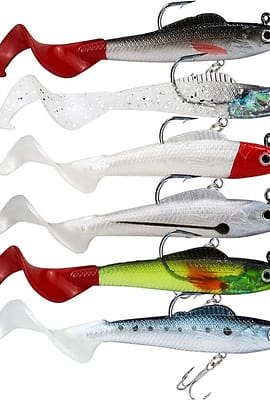
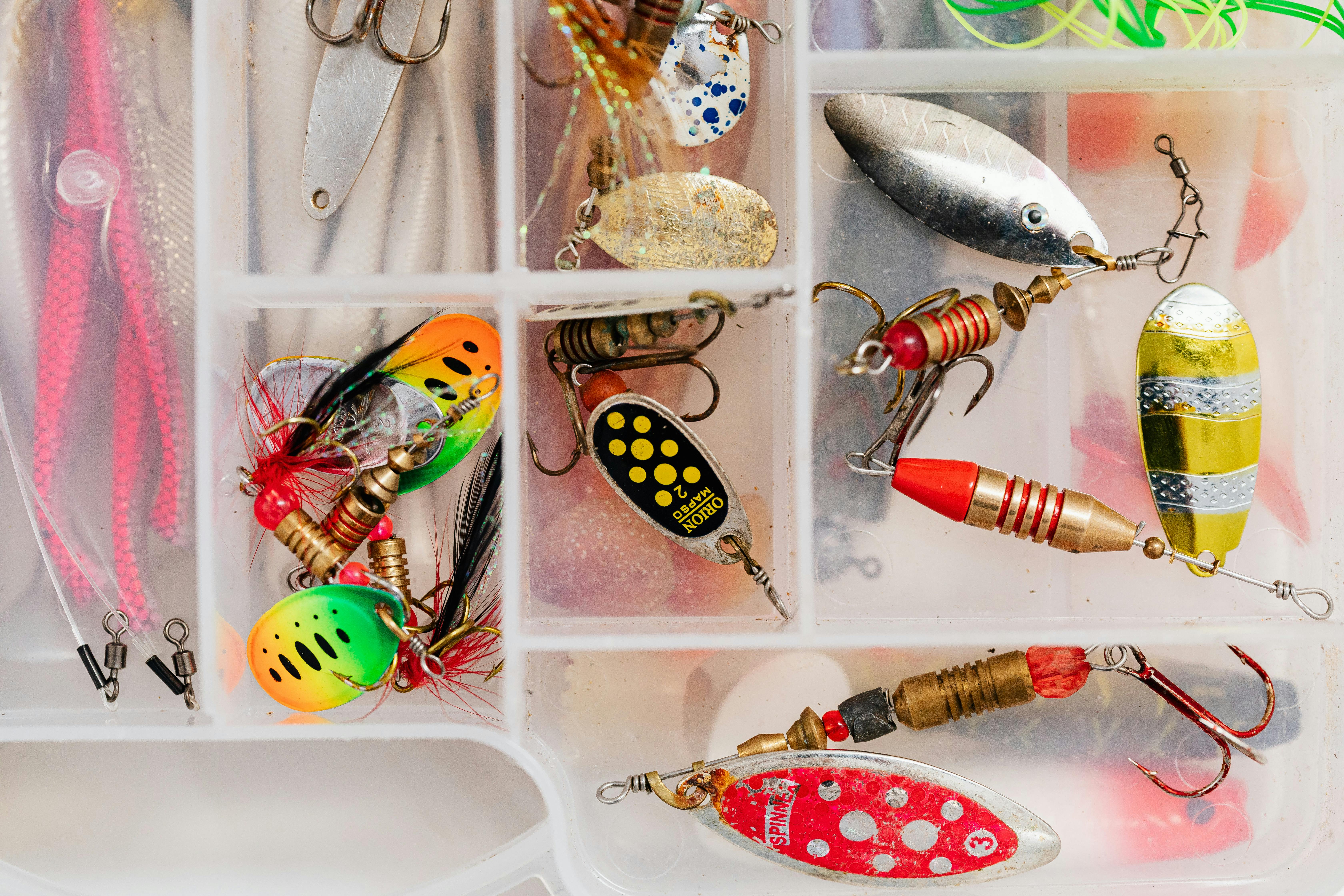
Terminal tackle is everything at the end of the line. For lake fishing, the basic categories are lures, hooks, weights, bait, swivels, and floats. Each covers a different job, and a small selection of each handles more situations than a large pile of one.
- Hooks in a few sizes, for bait fishing.
- Weights and floats, to control where your bait sits in the water.
- Swivels, to connect line to leader or lure.
- Bait, natural or artificial.
- Lures, including soft plastic swimbaits, jig heads, topwater baits, and crankbaits.
You do not need all of it on day one. A kit that includes a rod, reel, tackle, and a carry bag covers the essentials in a single purchase, and those kits suit both beginners and experienced anglers. Add specific lures once you know what the fish in your local water respond to.
Kit or Piece by Piece?
The choice between a kit and individual pieces comes down to how much you want to decide. A fishing kit or combo set bundles the essentials: a rod, a reel, tackle, and a carry bag. That removes most of the matching work, which is exactly the part new anglers find hardest.
The catch is that “kit” is a loose term in listings. An Amazon search for “beginner fishing kit” returns more than 6,000 results, and they do not all contain the same thing. Some are rod and reel only. Some include tackle and a bag. Reading the included items line by line is the difference between a solid first purchase and a box of duplicate hooks.
What to check in a beginner kit
- Does it include a rod, a reel, or both?
- Is the rod and reel pairing already matched?
- What tackle is included, and does it cover hooks, weights, and floats?
- Is there a carry bag or case?
- Does the listing describe the water or species the kit is meant for?
If a listing is vague about any of those, treat it as a reason to compare another option rather than a reason to guess. Buying separately works too, and it lets you put money into the rod and reel first, then add tackle as you learn.
How to Shop Listings Without Getting Burned
Fish Lizard is an affiliate store, which means it lists sport fishing tackle, gear, and outdoor products and sends buyers to Amazon to complete the purchase. The listings lean toward discounted prices and featured deals, across categories like rods and reel combos, lures, line, baits, and boat and marine parts. Brand names you will run into include KastKing, PENN, and Berkley.
Because the transaction finishes on Amazon, the order itself is handled there rather than on Fish Lizard, along with any after-sale questions. That is worth knowing before you click through, especially if you care who the seller is. A few habits keep bargain hunting safe:
- Read the included items, not just the headline.
- Check the seller and the condition of the item.
- Compare the kit price against buying the rod and reel alone.
- Confirm the rod and reel are compatible before ordering.
None of that requires expertise. It requires reading the page carefully, which is the same skill you will use at the water every time you decide what to tie on.
If You Fish From a Boat, Your List Gets Longer
Anglers with a boat carry a second shopping list that has nothing to do with casting. Boat and marine parts include items like outboard propellers and water pump impeller kits. These are maintenance pieces, not fishing tackle, but they decide whether you get off the dock at all.
If your first setup will be used mostly from shore, skip this category. Add it when you own or regularly operate a vessel, and check fitment against your engine before ordering, since marine parts are not universal.

A Buying Order That Keeps Things Simple
- Decide where you will fish most, and whether that water is fresh or salt.
- Pick a rod and reel, either as a matched combo or from a kit.
- Confirm what line the reel comes with and its stated line rating.
- Add basic terminal tackle: hooks, weights, floats, swivels, and a couple of lures.
- Add a small box or carry bag if the kit does not include one.
- Add boat parts only if you will fish from your own vessel.
Work through it in that order and the purchase looks less like a wall of options and more like a short list. Your first setup does not have to be your last one. It has to be good enough to get you on the water, where you will learn faster than any listing can teach you.
Frequently Asked Questions
What gear does a beginner angler actually need?
A rod, a reel, fishing line, and basic terminal tackle: hooks, weights, bait, swivels, floats, and a few lures. A kit or combo set that bundles a rod, reel, tackle, and carry bag covers most of that in one purchase. Add pieces as you learn which water you fish most and what you are chasing.
Are beginner fishing kits worth it?
Kits bundle a rod, a reel, tackle, and a carry bag, which makes them a practical starting point for beginners and experienced anglers alike. The main caveat is that listings use the word “kit” differently. Check whether the rod and reel are both included and exactly what tackle ships with it.
Should I start with a closed spin-casting reel or an open-bail spinning reel?
Both are common for beginners. A closed spin-casting reel is typically paired with a rod that has a pistol-style grip, while an open-bail spinning reel is the other standard starting option. Buying a matched combo or kit removes the guesswork, since the rod and reel are already chosen to work together.
Do I need separate gear for freshwater and saltwater?
Not necessarily separate everything, but the two are not interchangeable. The water you fish most should drive your first purchase, since lakes, creeks, and small rivers call for different choices than saltwater fishing. Start by deciding where you will spend most of your time, then buy for that water.
Do I need a boat to start fishing?
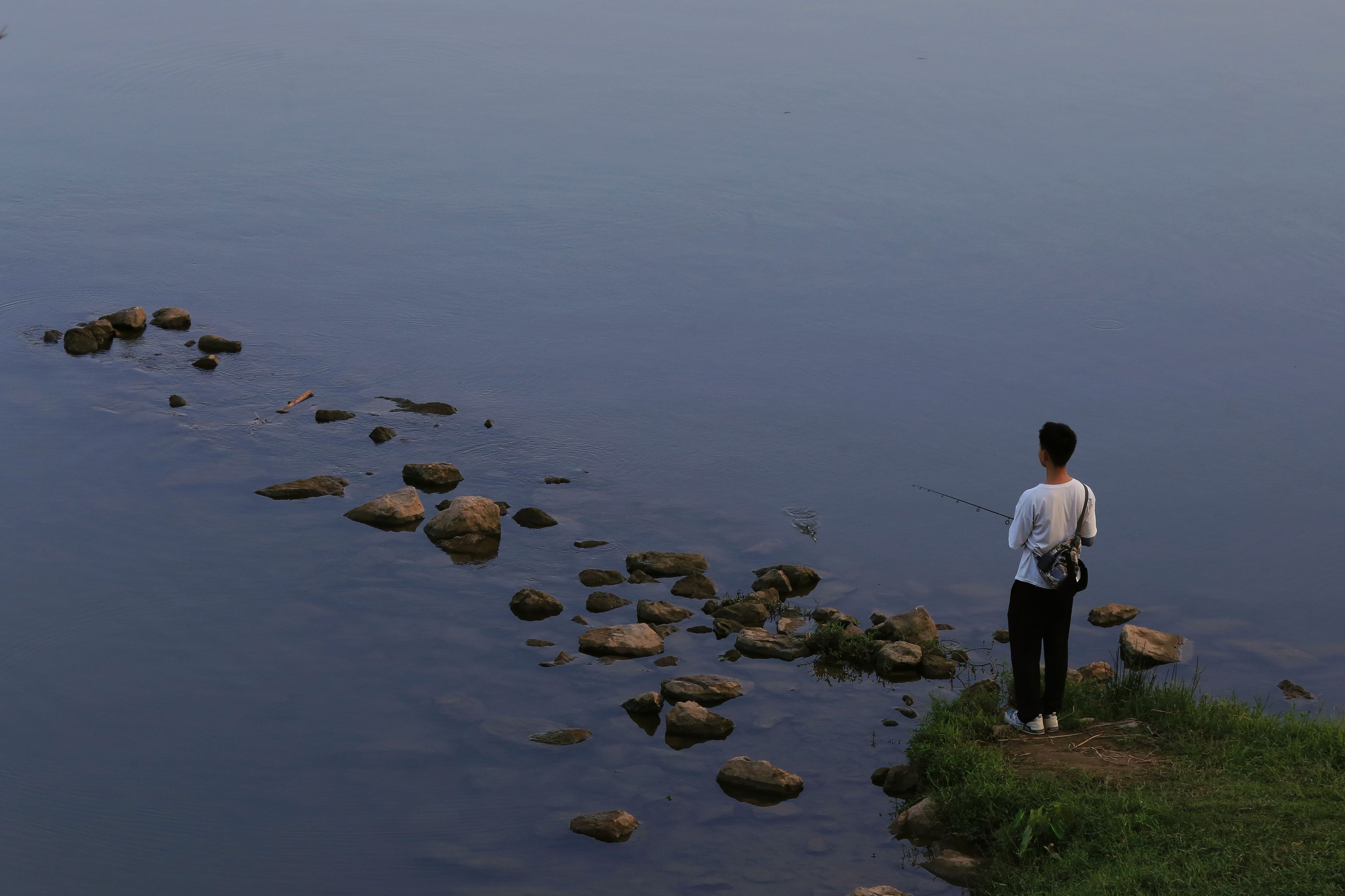
No. Many beginners start from shore on lakes, creeks, and small rivers, where a simple rod, reel, and small tackle selection is enough. Boat and marine parts such as outboard propellers and water pump impeller kits only become relevant once you own or regularly operate a vessel.